In this article
Keep responsibility visible at every transfer
Food delivery connects several different responsibilities. The restaurant prepares and packs the order, the delivery arrangement governs collection and transport, and the recipient receives it at the agreed destination. A reliable process makes those boundaries understandable. It should also explain who decides what happens when a package is damaged, an instruction is missing or a journey is interrupted.
For a food delivery arrangement, write down the intended handovers before service begins. Identify the order without exposing unnecessary customer information, confirm the package count and make the relevant handling instructions available. A Captain should not have to invent a food-safety decision because the responsible contact is unavailable or the instruction only exists in another team’s conversation.
Check the package without changing the product
Define a straightforward collection check appropriate to the service: the correct order reference, expected number of packages, visible packaging condition and any required separation or handling instructions. If a seal is damaged or a container is leaking, provide a clear route to the restaurant or responsible operator. Do not make opening or repacking food an improvised response.
FSSAI’s catering-sector guidance addresses transport cleanliness, protection from contamination and appropriate time and temperature controls. The guidance helps frame handling questions; the responsible food business must determine requirements for the actual product and service. General delivery instructions should not replace product-specific controls or current applicable requirements.
Plan for the journey that does not go smoothly
Agree how to report an address problem, a vehicle interruption or an unavailable recipient. The report needs an order reference, the issue and a reachable decision owner. Give Captains an approved action for the waiting period and an escalation route when instructions are not forthcoming. Avoid leaving the final disposition of a food order to whoever happens to answer first.
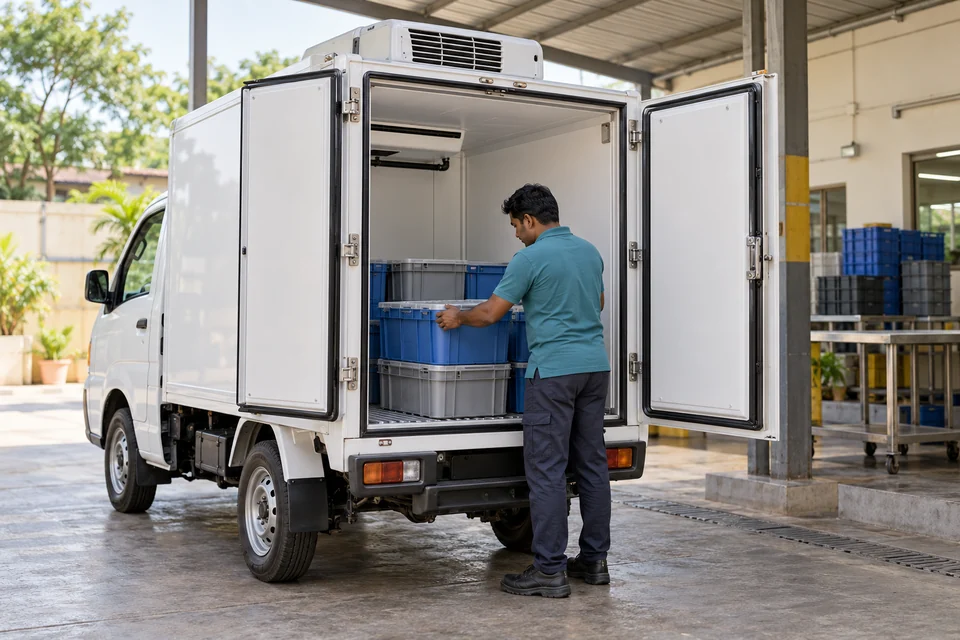
Where the service involves products requiring controlled conditions, treat that as a defined operating requirement. The UNEP and FAO report on sustainable food cold chains describes a connected system of infrastructure, energy and coordination. A suitable vehicle alone does not establish that system. More specialised work may need a separate logistics operating plan with the relevant expertise and responsibilities agreed in advance.
Record what was handed over and what needs review
At delivery, use the agreed confirmation method and record exceptions clearly. A successful app action, a photograph and physical receipt can represent different pieces of evidence; define which is required for the arrangement. Capture only what is needed, and avoid including bystanders, private interiors or unrelated personal details in a delivery image.
Review repeated packaging or instruction problems with the responsible food business and operating teams. Keep the discussion specific enough to change a process: which package, which handover and which instruction failed. A short record of the decision and the revised instruction is more useful than a general reminder to be careful. Safety depends on responsibilities that remain clear when the normal journey changes.