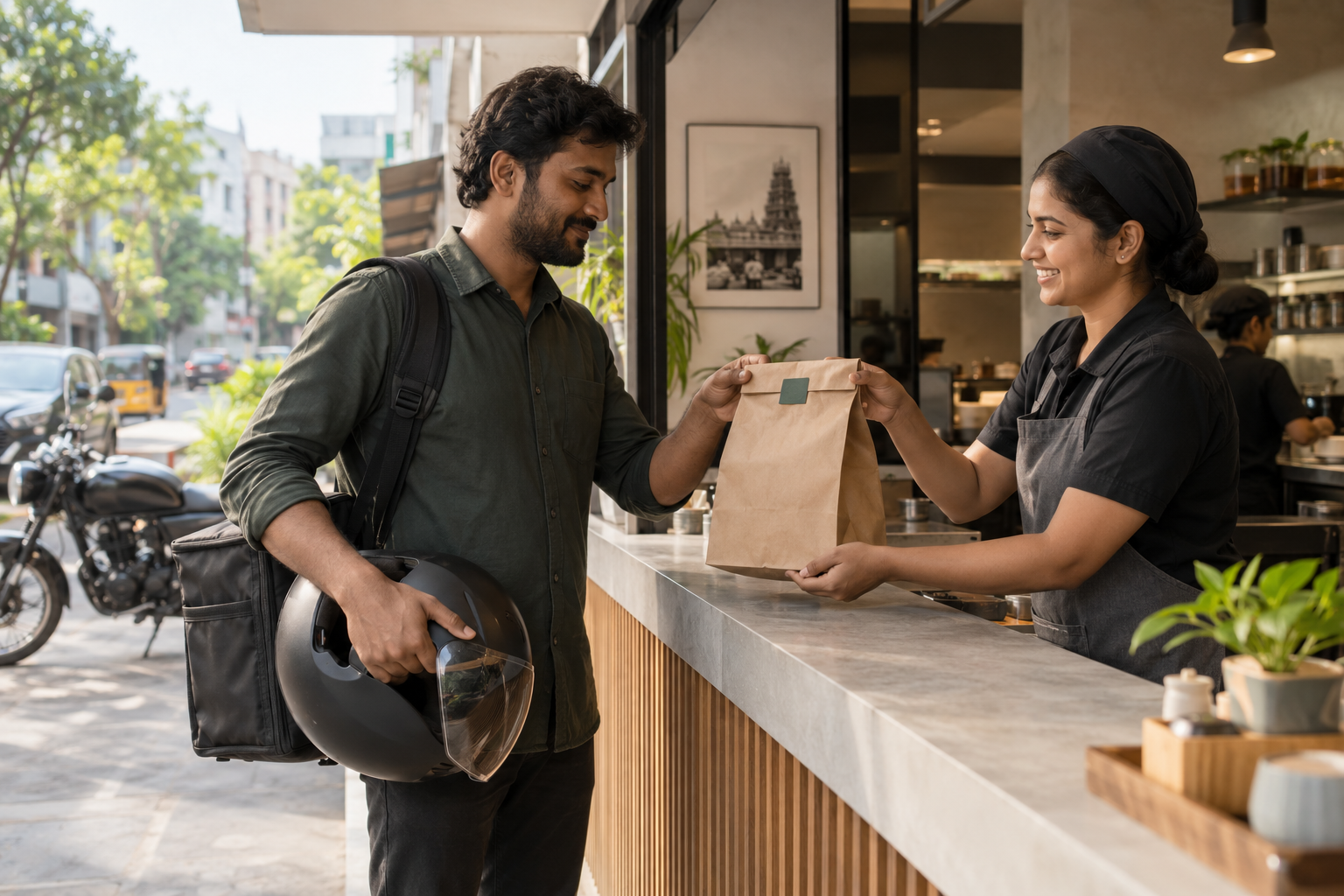
A report that says an order was late gives an outcome without explaining the cause. A Captain may have arrived before preparation was complete, waited at a collection desk, struggled to enter a building or needed help locating the handover point. Each situation calls for a different response.
The first useful step is to describe the journey in observable stages. Agree the events that can be recorded, what each event means and which partner holds the record. Where an event is unknown, leave it unknown. Filling a gap with an assumed timestamp can make an incomplete picture look more precise than it is.
For food delivery app teams, this is a way to distinguish a fleet-capacity question from a preparation or access issue. The app’s order and assignment records are part of the picture; the fleet partner needs agreed access to the information required for its role. Sparrow’s Food Delivery fleet support centres on vehicle access, Captain coordination and the operating responsibilities agreed with the app.
Separate the queues
At the restaurant, distinguish waiting for preparation from waiting to receive an already prepared order. The former points toward coordination around readiness. The latter may involve counter capacity, order identification, packaging checks or access to the pickup point. More vehicles do not automatically resolve either issue.
After collection, separate the road journey from the final approach and customer handover. Building security, a difficult entrance or an unanswered contact attempt may add work after the Captain reaches the destination. The operational record should make space for these reasons without treating every exception as the Captain’s fault.
Use a small, consistent event record
A pilot could record the relevant order reference, the readiness signal, arrival at the agreed pickup point, completed collection and completed customer handover. Choose only events that the participating teams can capture consistently and lawfully. An arrival recorded by a person and a location inferred by a system are different kinds of evidence; keep the method clear.
Pair an exception with a short reason and an owner. Useful categories might include preparation incomplete, collection queue, access difficulty, reference mismatch and customer contact needed. Allow a short explanation where the category does not fit. Review whether the categories describe real situations before making them part of a larger reporting routine.
Read the pattern before choosing the response
Compare similar locations and operating windows. A long wait at one restaurant during its busiest service should not automatically change the arrangement everywhere. Look for repeated causes and ask the people involved what they encountered. Averages can hide a cluster of difficult handovers, so examine individual exceptions alongside the overall picture.
Suppose most reported waits occur after meals are packed but before they reach the collection counter. That suggests testing the release and handover process. If Captains regularly arrive while preparation is still underway, test the readiness signal and dispatch coordination. These are hypotheses to examine with partners, not conclusions that can be drawn from a delivery-time total alone.
Decide what the next update should be
Waiting also creates uncertainty. Explain who updates the Captain, how an unresolved delay is escalated and who can change the assignment. The customer-facing platform or merchant should retain responsibility for the promises it makes to the customer. A fleet arrangement needs a clear interface with that responsibility.
Review the same evidence after a change: has the relevant cause become less frequent, has another queue appeared and has the work become more manageable for the restaurant and Captains? Agree the commercial treatment of waiting and other exceptions in the actual partnership. Sparrow’s Food Delivery solution connects the app’s operating requirements with vehicle access and fleet support. Specific capacity, responsibilities and delivery expectations need to be confirmed with the participating teams.