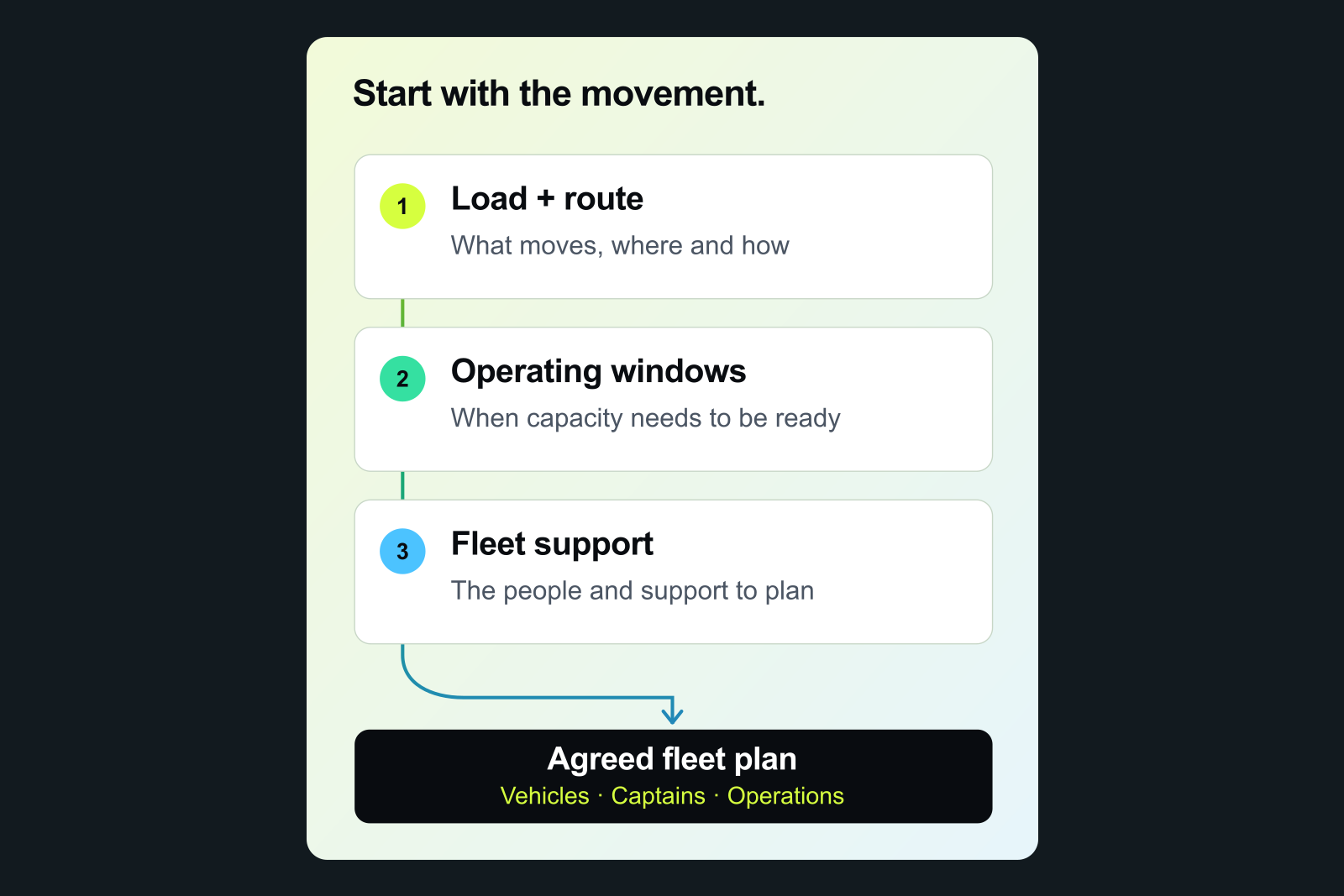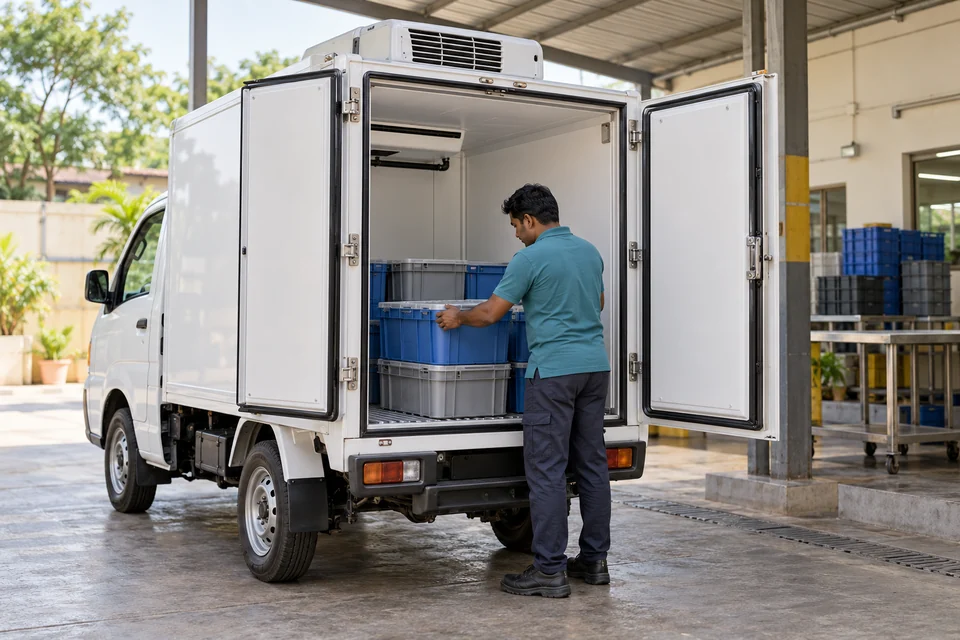
A request for a refrigerated vehicle is only the beginning of a temperature-controlled delivery plan. The buyer also needs to describe the goods, journey, packaging and handovers. Those details help establish what capacity to assess and what the operating team must protect along the way.
Sparrow can assess temperature-controlled requirements within Logistics, including local and hub-to-hub movements. Vehicle supply, suitability, handling, records and contingency responsibilities need to be agreed before deployment. A planning discussion should lead to a specific service scope, rather than an assumption that every refrigerated vehicle can serve every load.
Start with the goods and the complete journey
Ask the product owner to specify the required temperature range and handling instructions. Include the condition in which goods will be presented for loading, the packaging and any acceptance checks. The fleet discussion should use those requirements rather than choose a general temperature on the buyer’s behalf.
- Goods and load: product type, quantities, dimensions, packaging and specified range.
- Journey: collection and delivery points, duration, stops and expected waiting.
- Handover: loading windows, receiving hours, site access and people available to receive.
- Evidence: the checks and records the buyer requires at departure, in transit and on receipt.
Assess the vehicle against that brief
Suitable refrigeration or insulation, body layout and usable load space need to be considered together. Discuss the intended route and stop pattern with the proposed vehicle and equipment provider. A vehicle category or photograph does not establish its suitability for a specific product or journey.
The proposal should identify the vehicle arrangement, Captain instructions, equipment checks and responsibility for maintaining the agreed conditions. Confirm availability and support for the actual dates and operating windows. Where a requirement remains unresolved, keep it visible before the movement is committed.
Make each handover clear
Loading and receipt connect the transport service with the buyer’s wider operation. Agree who prepares the goods, who loads and unloads, and who checks and accepts the consignment. Practical arrangements matter when a site is busy or the intended recipient is unavailable. Include what happens when a required record is missing.
- Before loading: confirm the goods, vehicle and required checks are ready.
- At transfer: identify who checks condition, records exceptions and accepts responsibility.
- At receipt: agree the record, acceptance process and route for unresolved concerns.
Agree the response before something changes
Set out what happens if a collection is delayed, equipment develops a fault or a recorded reading falls outside the agreed range. Name the contact who receives the alert and the party authorised to decide what happens to the goods. Do not leave that decision to an unsupported Captain.
Any alternative vehicle, transfer or recovery arrangement needs its own confirmed scope. Agree the information to retain and how the buyer will review the incident. Start with a defined movement whose people, equipment and support can be checked, then use the operating evidence to assess further routes.