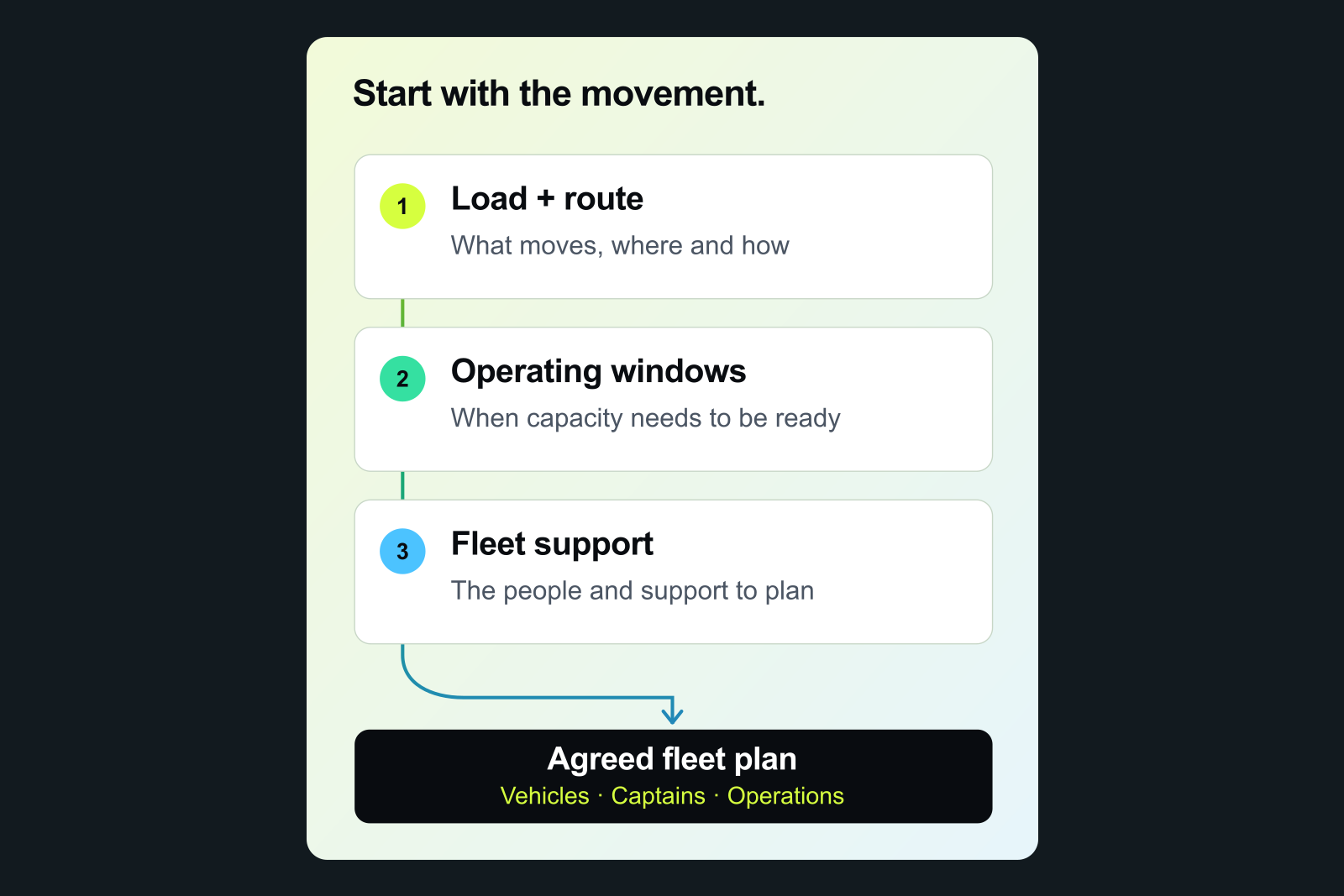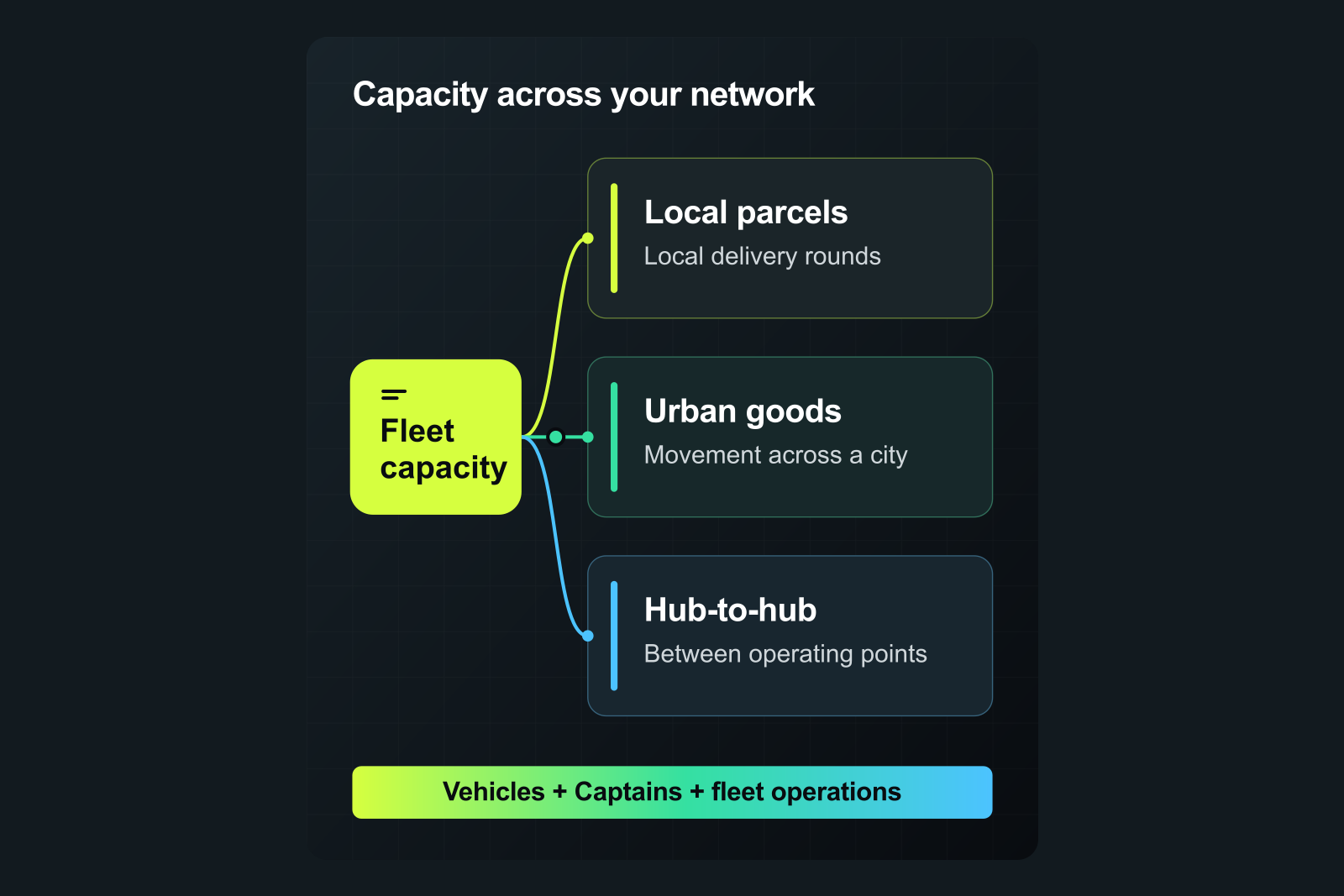
A logistics fleet review should show whether the promised capacity was usable for the work required. The number of vehicles associated with a network is only a starting point. Buyers also need to know which vehicles and Captains were ready, where they were needed and what interrupted service.
A small set of shared measures can make the operating relationship easier to manage. Define the requirement and the evidence behind each measure before launch, then use the same definitions when reviewing delivery of the service.
Define readiness for the actual duty
Specify the vehicle category, body, load suitability, location and operating window. Include the agreed condition, documents, equipment and energy checks. If the goods have a specified temperature requirement, confirm the required vehicle equipment, handling instructions and recording arrangements as part of readiness. Confirm a suitable Captain is available for the duty and knows how to obtain support.
Keep vehicle readiness and Captain availability visible separately, then assess whether both are present together. A ready two-wheeler cannot replace a requested heavy commercial vehicle, and a serviceable truck without an available Captain does not complete the allocation.
Compare available capacity with the agreed requirement
For a time-based service, count usable vehicle–Captain hours separately for each category, location and required window, capped at that window’s requirement. Keep excess availability separate. For scheduled movements, check whether the requested vehicle and Captain were ready at the agreed location and time. A surplus in one category or later window cannot make up an earlier shortfall.
Record shortfalls where they occur. An allocation made later in the day may support later work without covering an earlier gap. Review fulfilled movements separately from fleet readiness, because loading, site access and the customer's wider operation can also affect completion.
Track interruptions through to restored capacity
Record when a vehicle fault, Captain absence or energy issue affects an allocation. Identify the response owner and the recovery arrangement available within the service scope. Capture when usable capacity returns, along with any work that remains uncovered.
Review recurring causes as well as individual incidents. A maintenance pattern, difficult support access or an unclear handover can require a change to the operating model. The aim is an informed response that addresses the source of repeated friction.
- Requirement: identify the vehicle category, location and window affected.
- Interruption: record the cause, start time and response owner.
- Restoration: record when usable capacity returns and any movement still uncovered.
Connect service evidence to the commercial review
Use the full agreed operating cost and a consistent unit of delivered capacity when comparing periods or options. Keep reserved capacity, available capacity and completed movements distinct. Each answers a different question about the value and use of the service.
Sparrow's vehicles, Captains and operations model brings the fleet relationship into one agreed scope. Technology and local infrastructure support that operation. Set the readiness measures, reporting responsibilities and review rhythm together so decisions about expansion follow the actual service evidence.