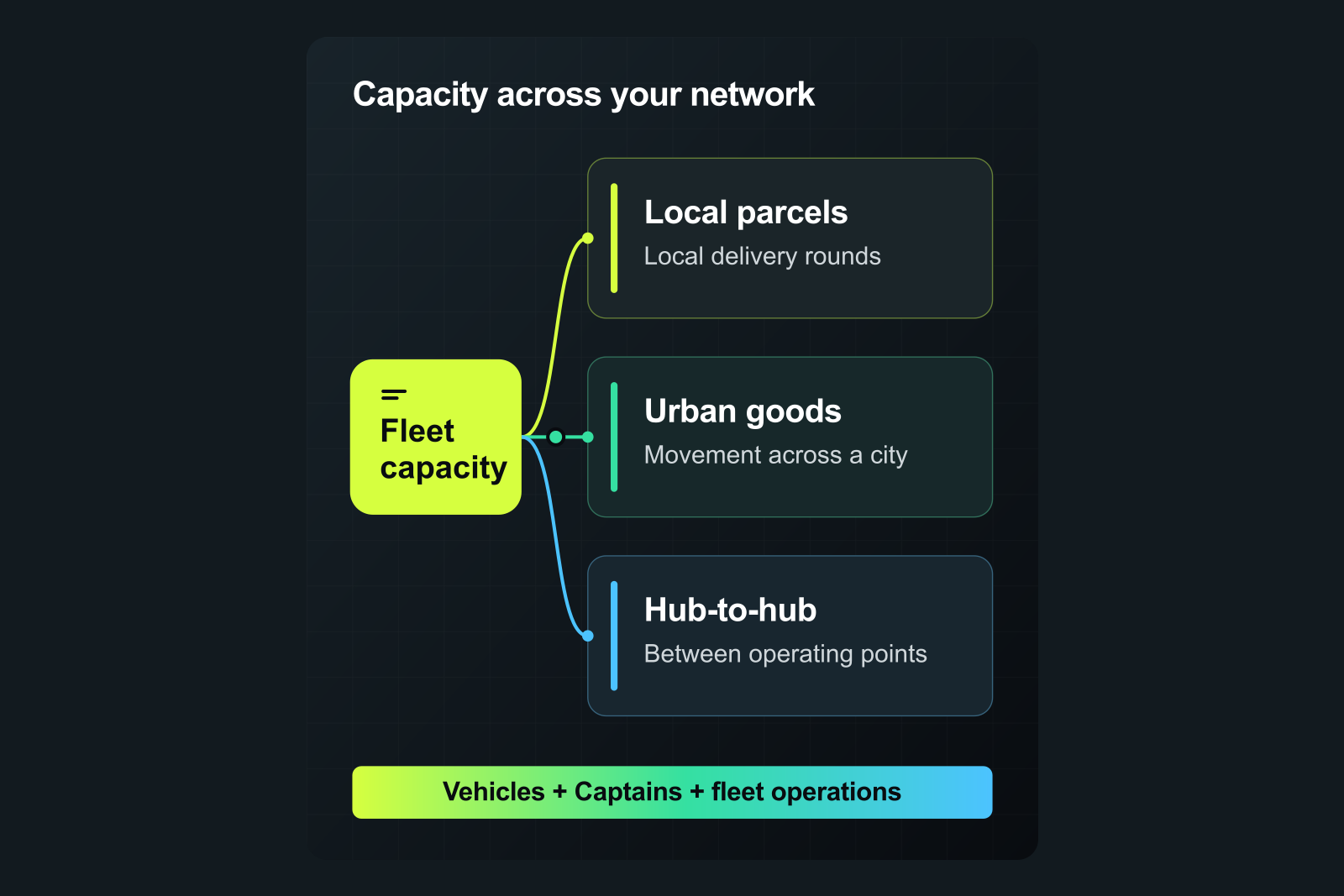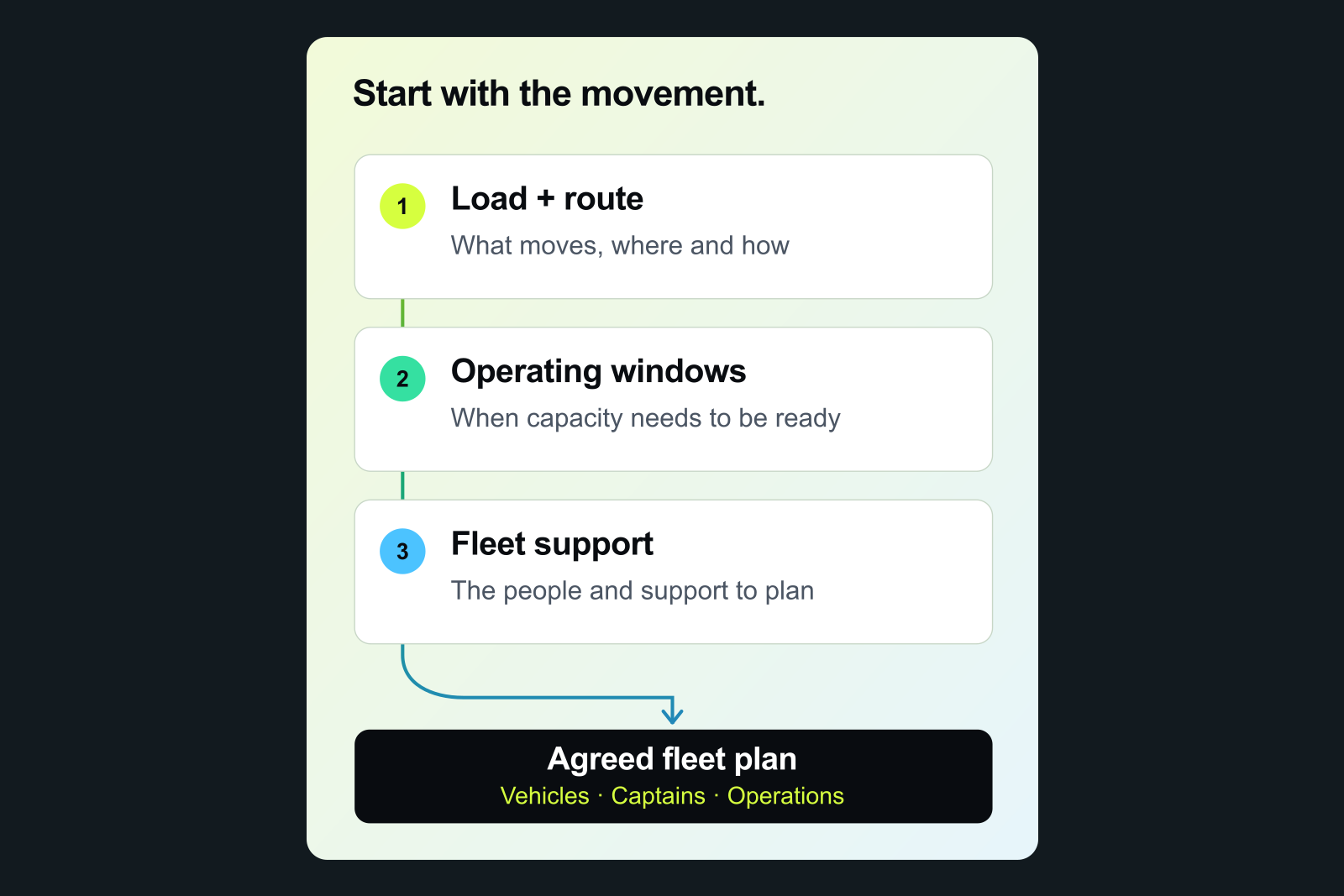
A logistics buyer needs confidence in the capacity available for regular work while keeping room for demand to change. New service areas, seasonal volumes and uneven collection patterns can all affect the vehicles and Captains required. The commercial arrangement should make those changes manageable.
Dedicated and flexible capacity address different parts of that requirement. A practical plan connects the expected work to an agreed source of vehicles, Captain availability and operating support. It also makes clear when capacity is reserved and when it still needs confirmation.
Establish the work that needs a regular allocation
Identify the recurring locations, routes, operating windows and vehicle types. Consider how reliably the requirement repeats and how much notice is available when it changes. This helps define the base allocation your business can plan around.
Dedicated capacity can be shaped around that continuing work, with vehicle access, Captain arrangements and support responsibilities specified together. Agree what happens during quieter periods, scheduled maintenance or a temporary pause in demand. A reservation needs a shared understanding of both availability and use.
Define flexibility as a specific arrangement
Explain the variable requirement: additional vehicles for a busy period, a different body type for a particular load or capacity for a newly added route. Set the notice period, request process and point at which the allocation becomes confirmed.
The plan may combine smaller vehicles for local collections with commercial vehicles for consolidated movements. Keep each requirement separate enough to price and support properly. Flexibility is useful when the available options and their limits are understood before a peak arrives.
- Regular allocation: reserve capacity around a recurring route or working window.
- Variable request: specify the notice and confirmation needed for additional or different capacity.
- Mixed arrangement: define the base separately from the additional requirement.
Compare the complete operating cost
Make vehicle charges, Captain costs, energy, maintenance and operating support visible in the comparison. Clarify the treatment of waiting, additional distance, extra hours, cancellations and return movements. Identify which charges continue when the vehicle is available but unused.
Different arrangements can be priced per vehicle, operating period, trip or lane. Compare them against the same work and service scope. A lower starting price can leave important responsibilities outside the package, while a broader service may include support the buyer would otherwise organise separately.
Give changes one operating owner
Sparrow can shape vehicles, Captains and fleet operations around the agreed base and variable requirement. Set out who receives changes, confirms availability, communicates gaps and coordinates the response to an interruption. The customer's shipment and service priorities should remain clear throughout.
Review the arrangement against actual work: fulfilled allocations, unused reserved capacity, interruptions and total cost. Use that evidence to adjust the next period's fleet plan and commercial scope as the network develops.