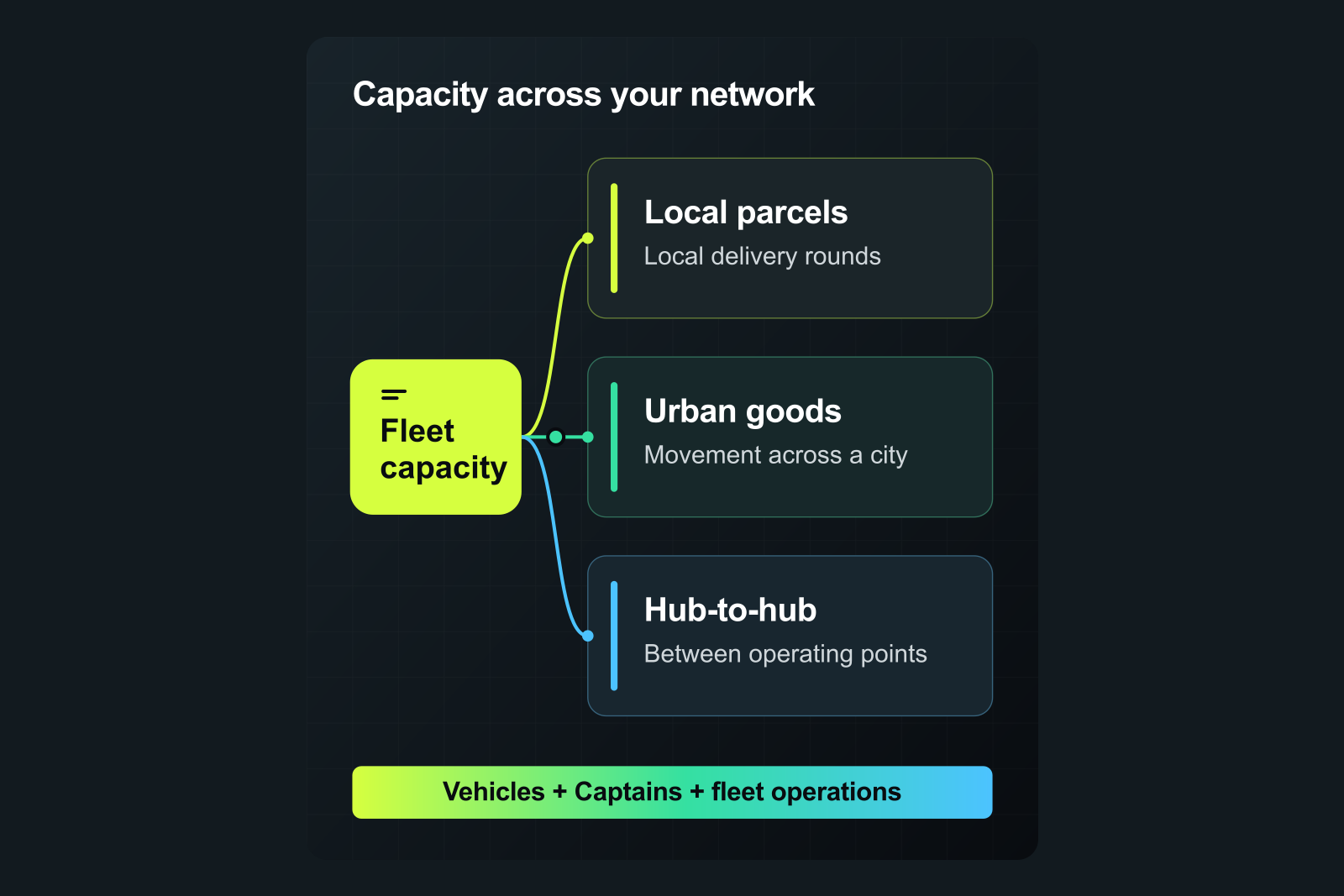
A logistics network can need several vehicle types within the same operating day. Small parcels moving through a neighbourhood, collections from business premises and consolidated loads between facilities create different requirements. A useful fleet plan makes those differences visible before vehicles are allocated.
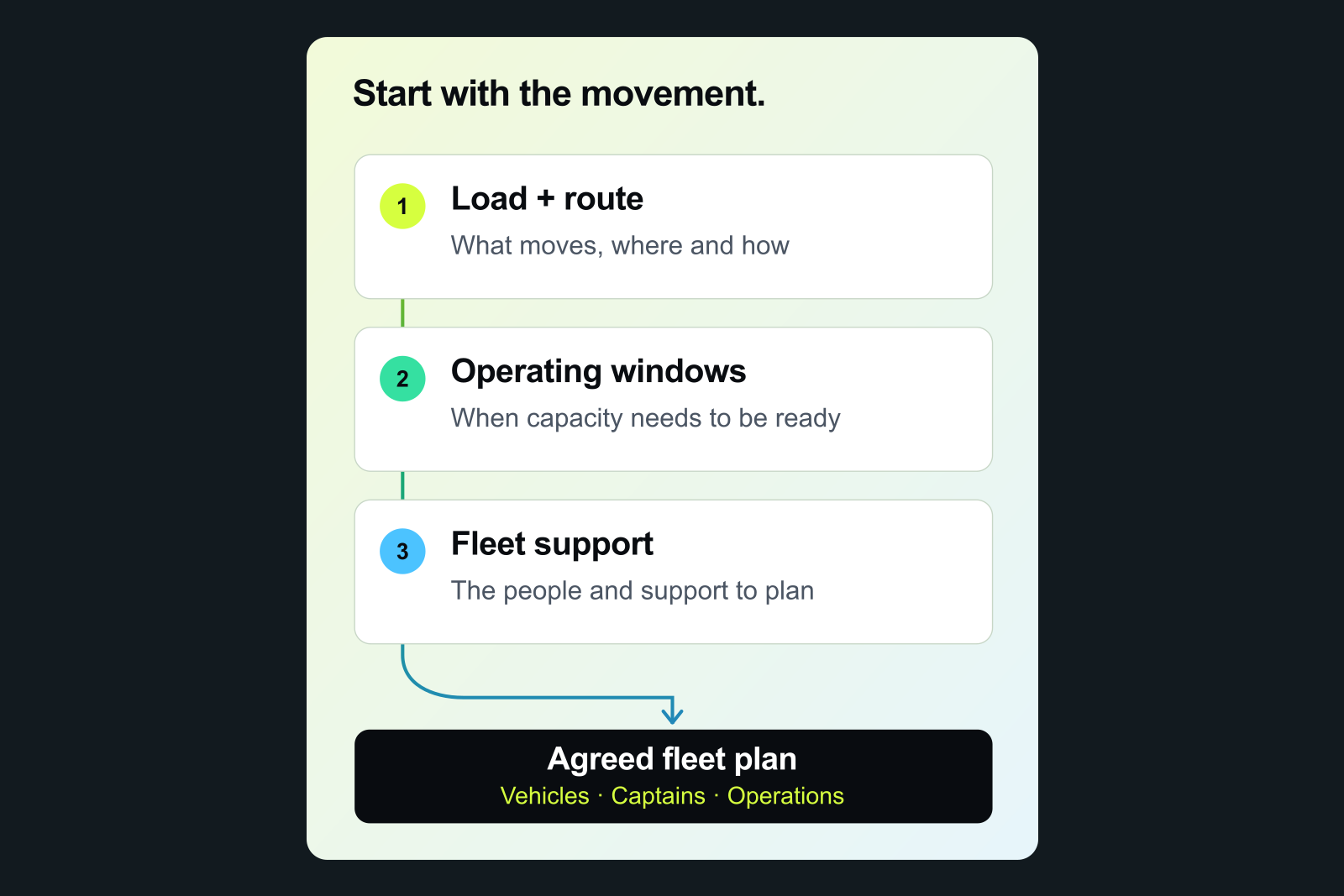
Start with the movement your business needs to complete. Vehicle choice follows the load, route, access and working window. Bringing Captains and operating support into that decision gives the buyer a clearer view of the capacity being requested and the service around it.
Describe the load before choosing the vehicle
Record the weight, dimensions, packaging and handling needs of the goods, alongside the expected volume through the day. Explain whether the work involves individual deliveries, several stops or a consolidated movement between facilities. Body type and usable loading space matter alongside the vehicle category.
Consider two-wheelers for compact consignments and suitable three-wheelers for urban goods movement. Light commercial vehicles can serve larger local loads and collections. Medium and heavy commercial vehicles become relevant as consolidated loads and route requirements grow. The actual vehicle must be checked against the particular load; a category name alone does not establish suitability.
For temperature-sensitive goods, the brief also needs the product owner’s specified range, packaging, journey duration and handling conditions. Assess refrigeration or insulation, monitoring and contingency requirements against that movement. Suitable vehicle availability and these arrangements must be confirmed before deployment; a refrigerated body alone does not establish that the whole service meets the requirement.
Check how the vehicle will reach the work
A vehicle may suit the goods yet struggle with the collection or delivery location. Include entrance dimensions, access restrictions, loading arrangements, stopping space and the sequence of calls in the operating brief. Identify who provides any loading or unloading assistance.
Distinguish local delivery from scheduled movement between hubs or cities. Each has its own working pattern, journey length and support needs. Confirm the expected return movement too, so the cost and time of returning a vehicle are visible in the plan.
Build vehicle readiness into the choice
Assess the Captain requirement, vehicle care, energy access and response to interruptions together. Sparrow’s electric two-wheeler model uses battery swapping. For other vehicle categories, assess the charging or energy arrangement suited to the duty. Apply the same planning discipline to fuel-powered and larger vehicles.
Sparrow brings vehicles, Captains and fleet operations into an agreed service. Discuss which responsibilities belong in the package, including readiness checks, maintenance coordination and local assistance. This connects the vehicle decision to the operation that will support it.
Leave with a requirement that can be priced
A useful brief states the locations, goods, vehicle and body requirements, operating windows, expected movements and support scope. It also identifies what can vary and what the service must consistently meet. That gives both parties a basis for comparing capacity and commercial options without treating every vehicle as interchangeable.
- Goods: dimensions, weight, packaging and any specified temperature or handling requirements.
- Movement: reporting points, access, stops, departure and handover windows.
- Service: vehicle and Captain requirements, support ownership and the response to interruption.