In this article
Give the campaign a specific job
A product launch, local offer and brand-awareness campaign need different creative choices. Start with the people you want to reach, the message they should remember and any action you want to invite. Then define the cities, dates, formats and budget that will shape the physical plan.
A campaign in Chennai, Bengaluru or Hyderabad may share a central idea while using different language, offers or local references. Review those details with the people approving the campaign before sending artwork to production.
Plan backwards from the first live day
The launch date needs room for inventory confirmation, vehicle measurements, artwork approval, material preparation and installation. Establish when vehicles can be made available without disrupting their agreed work. Record the start date for each group of placements when a campaign launches in stages.
Agree the person who can approve the final production proof and the deadline for changes. Late creative or a changed vehicle allocation calls for a review of the delivery plan. Do that before promising the original launch scope. Keep the campaign period separate from the time needed to install and remove it.
The US FTC’s substantiation framework asks whether evidence supports the advertising claim being communicated. A production approval can record the vehicle and surface specification, artwork version, approver, approval date and installation window. State what must be reapproved if the allocation changes.
Design for the actual surface
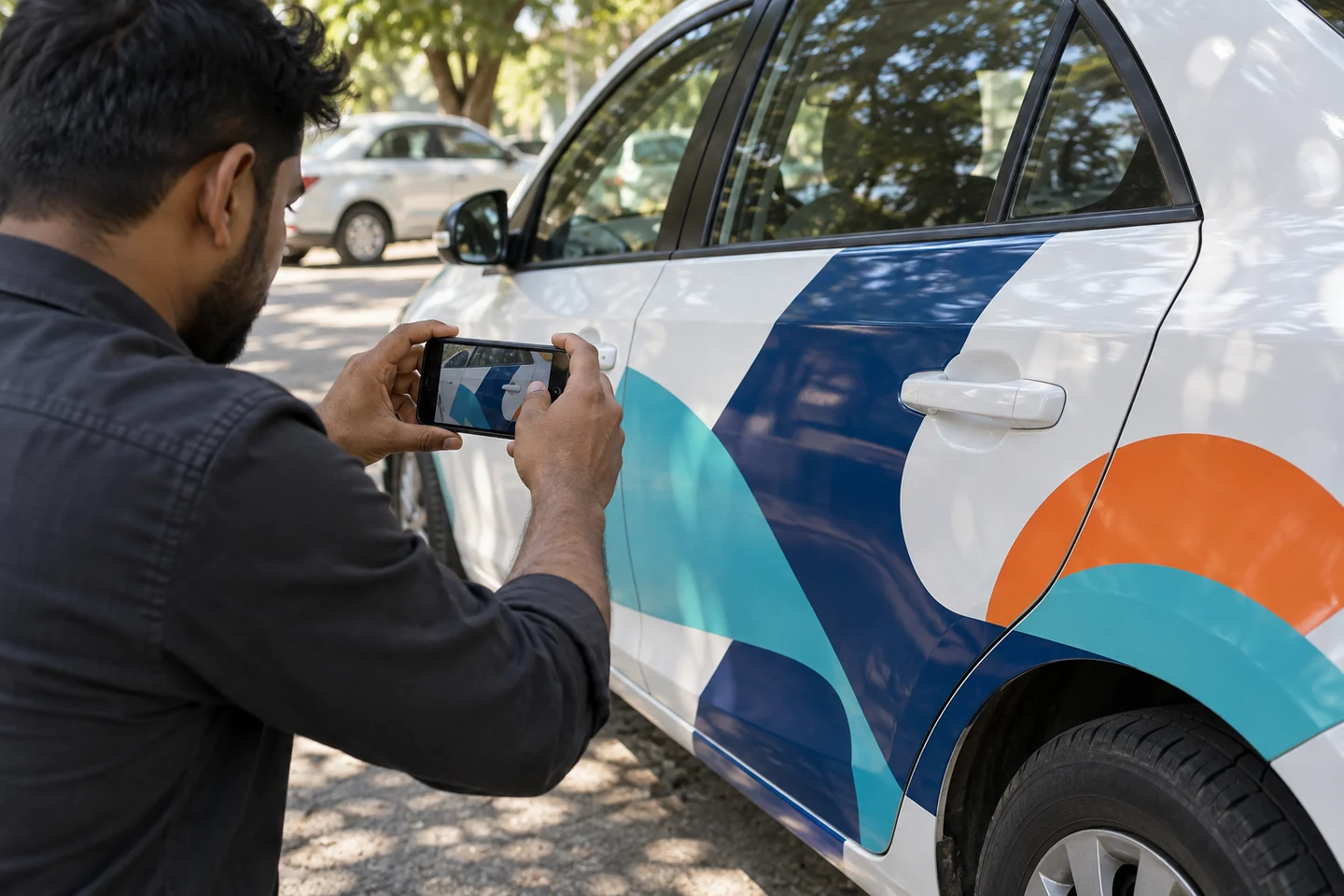
Exterior creative needs a clear order: brand, main message and a simple next step where appropriate. Check doors, handles, seams and the usable panels against the real vehicle specification. A flat artwork file can hide problems that become obvious when the design is fitted to the vehicle.
Interior placements allow a different reading situation. Check the viewing position, legibility, mounting and fit within the passenger space. Approve a representative production sample where useful. Digital placements require their own assessment of confirmed screens, creative specifications, playback arrangements and technical responsibility.
Give sampling its own operating plan
A sample needs to arrive in good condition and be offered in a way that makes sense for the passenger and the product. Establish the stock supplier, packaging, storage needs and method of distribution. Include batch or expiry information where relevant. Brief participating Captains or field staff on the agreed process.
Plan replenishment and the treatment of unused, damaged or returned stock. Test any coupon or feedback route before distribution begins. Keep the choice to accept a sample or respond to an invitation clear.
Accept the installation and plan its upkeep
Connect each vehicle or placement identifier to the approved artwork, date and acceptance photographs during installation. Check material fit, finish and the condition of the relevant surface. Record anything that needs correction before treating the unit as ready for the campaign.
Name the team responsible for condition checks, replacements and changes during the booked period. Agree how a vehicle going off the road will be reported and whether an approved substitute is required. The buyer should be able to follow these changes without reconstructing them from scattered messages.
Include removal in the original scope
Set the end date, removal responsibility and vehicle-access arrangements while planning the launch. Agree how remaining samples and reusable materials will be returned. Set out how the closing vehicle condition will be recorded. Any extension should be confirmed before the booked period ends.
A production-ready brief makes the next campaign planning enquiry more useful. Share the intended formats, cities, dates, artwork status and the field services required so Sparrow can help shape a workable execution scope.