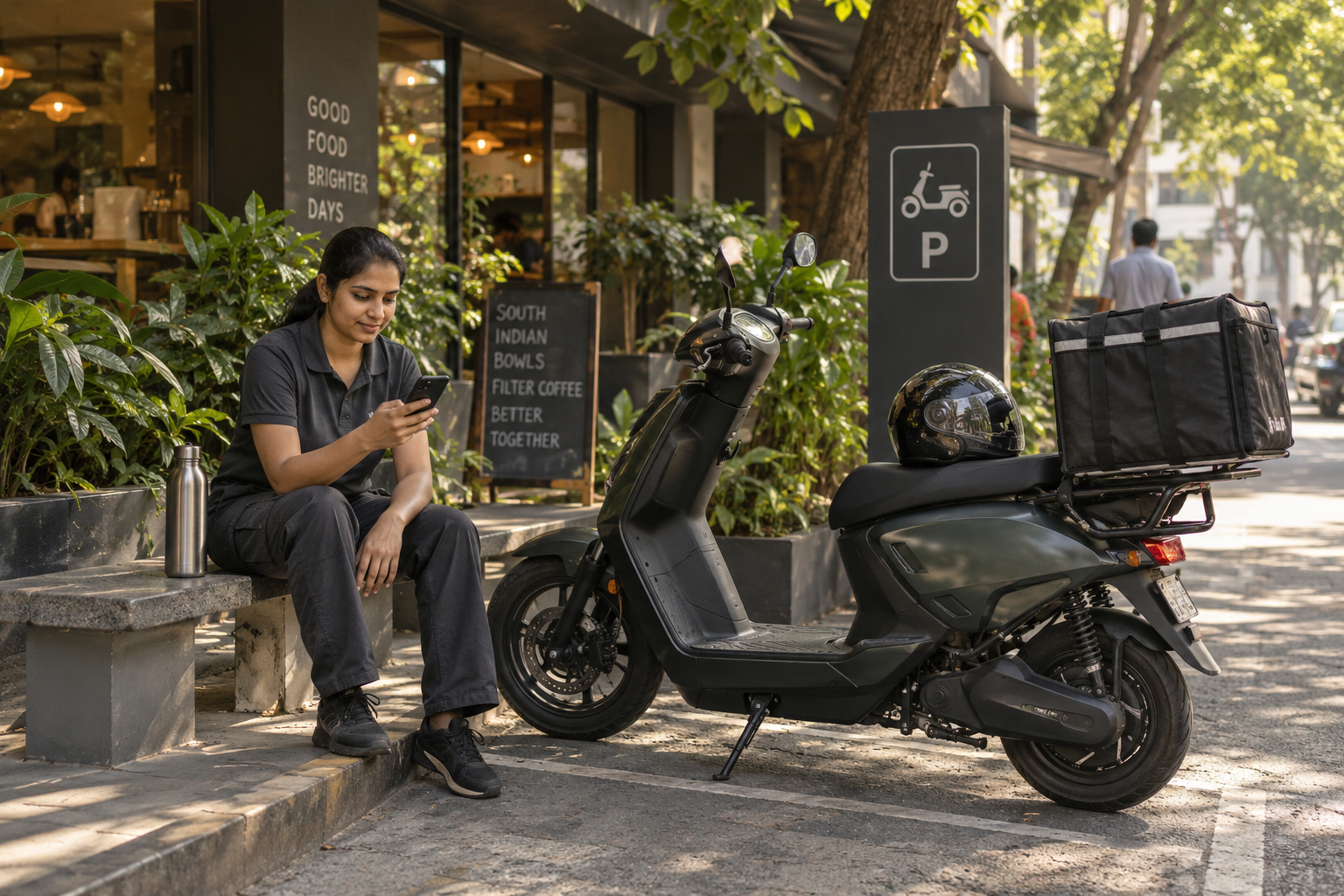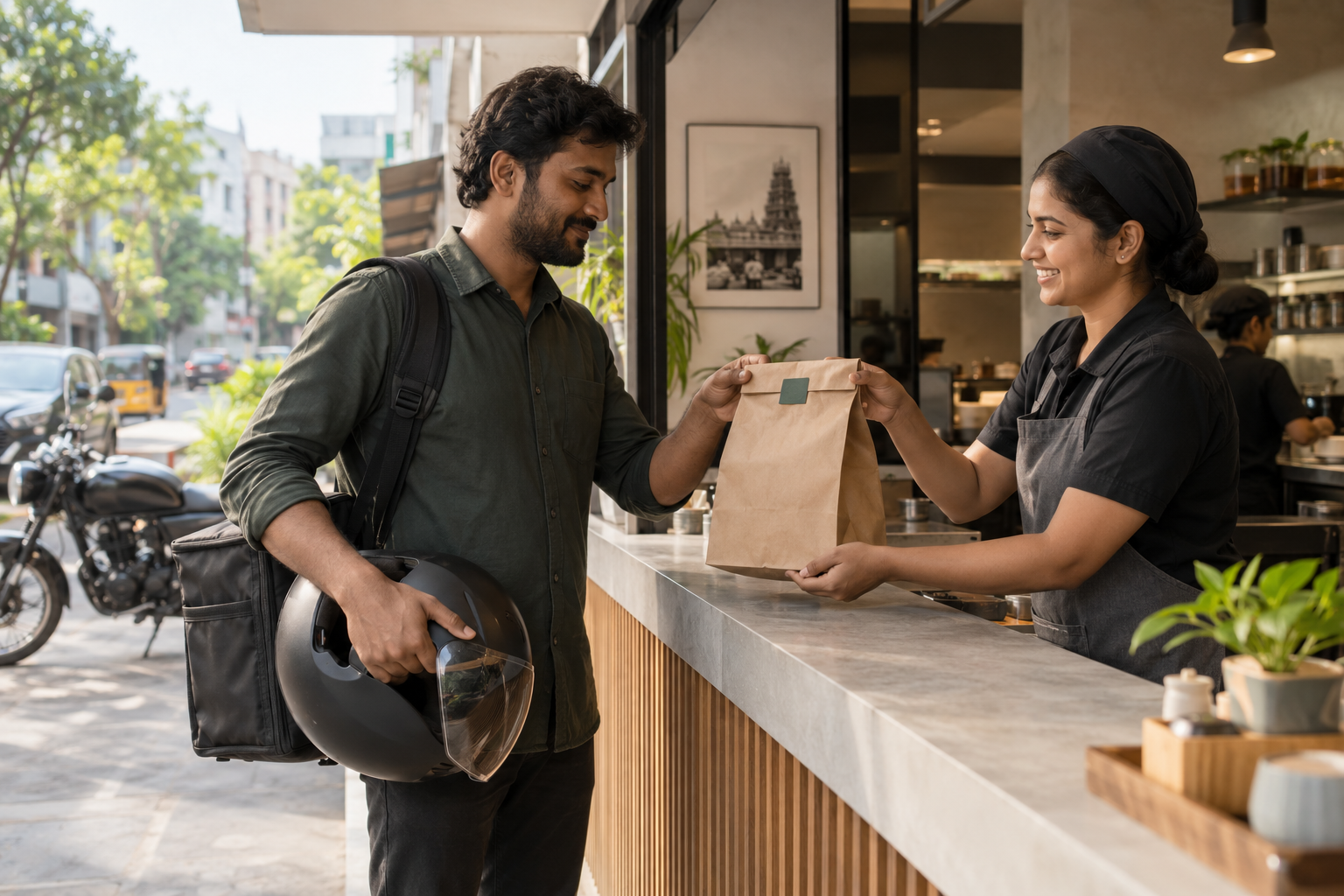
A restaurant pickup is a meeting between two workflows. The kitchen prepares and packs an order; a Captain arrives to collect it and continue the journey. If those workflows use different assumptions about readiness, the handover becomes a source of confusion. An order marked accepted may still be in preparation. A packed order may be waiting in a place the Captain cannot find.
A useful pickup arrangement makes those distinctions visible. It does not need to prescribe how every restaurant runs its kitchen. It needs to explain when collection is appropriate, where the Captain should go and who can resolve an exception. These are practical questions for a prospective fleet or platform partnership, before the first collection is planned.
For a food delivery app evaluating a fleet partnership, these handoffs define the support requirement. The app retains the consumer order, assignment and customer offer; the restaurant controls preparation. Sparrow’s Food Delivery solution centres on suitable vehicles, Captain coordination and agreed operating support at that interface.
Walk the pickup from the street
Start outside the restaurant. Identify the lawful stopping or parking arrangement, the entrance used for collections and any building access restriction. Then walk to the handover point. A location pin alone does not explain whether the pickup counter is upstairs, inside a food court or separate from the customer entrance.
Write the instructions as someone new to the location would need them. Include the entrance, the collection point and a role or contact route for questions. Keep customer dining queues and collection queues understandable. If access changes during a meal window, decide how that change reaches the Captain before arrival.
Agree what ready means
Distinguish an accepted order, preparation in progress, packing in progress and an order released for collection. The restaurant should define the signal it can reliably provide; the delivery arrangement should explain how that signal reaches the person coordinating the pickup. A label is useful only when both sides act on the same meaning.
For example, a drink packed separately from the food can make an apparently complete order incomplete at the counter. Agree how the restaurant confirms that the items intended for this handover are together. The Captain needs a way to check the order reference and the visible handover requirements without opening sealed packaging or taking over the restaurant’s preparation responsibilities.
Make the handover easy to recognise
A simple handover record connects the order reference, the collection point and the person receiving it. Decide which confirmation is required, who records it and what happens when the reference does not match. Avoid unnecessary sharing of customer information at a public counter.
Packaging condition and the number of packages can be checked against the agreed procedure. A leaking package, missing item or uncertain order should have a named resolution route. The Captain should know when to pause collection and whom to contact; the restaurant should know who can confirm the next step. Use the applicable food-handling and platform requirements for the actual operation.
Test exceptions as well as the normal flow
Walk through a busy counter, an order still being prepared, a closed entrance and a reference that cannot be found. For each situation, write the next action, its owner and the update the Captain receives. An escalation that simply sends people between the restaurant and a platform leaves the handover unresolved.
A bounded pilot can review pickup instructions, readiness signals, waiting reasons and incomplete handovers. Record where the sequence broke and change that part of the arrangement before expanding it. Sparrow’s Food Delivery solution connects vehicle access, Captain coordination and operating support with the app’s pickup needs. Restaurant participation, fleet responsibilities, vehicle suitability and commercial terms need to be agreed for each arrangement.